Organised by Eco-Business in partnership with UNDP

Unlocking AI for sustainability

AI is emerging as the defining technology of this decade. Organised by Eco-Business in partnership with the United Nations Development Programme (UNDP), the inaugural Unlocking AI for sustainability summit brings together government leaders, investors, technology companies and civil society to confront the choices that will decide whether AI broadens opportunity across Asia – or further deepens inequality.

Date
20 November 2026
Time
9.00am to 3.00pm, GMT+8
Venue
Shangri-La Orchard, Singapore
Summit starts in
Why now

The Next Great Divergence — or the Next Great Convergence?

Artificial intelligence (AI) is emerging as the defining technology of this decade, with consequences reaching far beyond the technology sector. If deployed responsibly, AI can drive productivity, accelerate climate solutions and create new economic opportunities across Asia. But these gains are far from guaranteed.

US$0T
Potential addition to global GDP by 2030, UNDP estimatesIncluding an estimated US$1 trillion for ASEAN economies
0M+
Senior-level visitors to Eco-Business each year68% senior management and above
0+
Decision-maker contacts across Asia Pacific and beyondEco-Business marketing network
0
Years as the region's trusted sustainability platformUCFS hosted in six Asian markets since 2018
Join us

Two ways to be in the room

For delegates

Attend the summit

Senior government officials, diplomatic representatives, business leaders and key decision-makers across financial institutions, corporates and technology firms, academia and civil society.

  • Be part of the conversation A business- and policy-focused dialogue featuring senior experts across industries.
  • Explore critical themes Sustainable AI infrastructure, AI for resilient economies, inclusive AI and human development, financing the AI economy, and AI safety and governance.
  • Meet key people An opportunity to foster collaboration and partnerships with senior business leaders, regulators, and policymakers.
For organisations

Partner with UAIFS

From founding partner to outreach partner, every partnership is co-developed with you around your objectives.

  • Shape the narrative Co-curate sessions with the Eco-Business team.
  • Reach senior decision-makers 1.8 million senior-level visitors a year and 115,000+ contacts across Eco-Business channels.
  • Showcase your brand Logo visibility throughout the event.
Featured speakers

Our speakers

Featuring distinguished speakers across government, policy, multilateral organisations, FIs, corporate, technology and industry.

Nominate a speakerView all speakers
JC

Jessica Cheam

CEO and Founder, Eco-Business

Jessica founded Eco-Business and has spent two decades at the intersection of media, sustainable development and ESG. She advises boards of governments and multinationals on ESG strategy and governance, with a particular interest in where sustainability meets technology.

Speaking on

AI governance and board oversightSustainability and technologyJust transition
Full bio

She is an independent non-executive director of Wilmar International and ComfortDelGro, where she chairs the Board Sustainability Committee and sits on the Digitalisation Committee. A former political correspondent at The Straits Times, she manages The Liveability Challenge, is the author of Forging a Greener Tomorrow, holds INSEAD's Certificate in Corporate Governance, and regularly speaks at forums including the World Economic Forum's Annual Meeting in Davos.

At the summit: Welcome remarks
EV

Edward Vrkić

Resident Representative, UNDP Malaysia, Singapore and Brunei Darussalam

Mr. Vrkić is currently serving as UNDP's Resident Representative to Malaysia, Singapore and Brunei Darussalam. Prior to this, he was the Strategic Adviser to UNDP's Bureau for Asia and the Pacific and before this, UNDP's Deputy Resident Representative to Papua New Guinea.

Speaking on

Inclusive developmentDigital inclusionClimate resilience
Full bio

He has served in various senior diplomatic, advisory, civil service and private sector positions over the last 25 years across the Asia-Pacific, Middle East and Africa. These include for the Australian Department of Foreign Affairs and Trade, Australia's Agency for International Development, as Senior Foreign Policy Adviser to the Australian Foreign Minister, Chief of Staff to Pacific Island Forum Leaders, and Australia's Head of Aid Operations and Humanitarian Coordinator to Papua New Guinea.

Mr. Vrkić has a master's degree in international relations (with distinction) from the Australian National University and a Bachelor of Arts with honours (first class) from the University of Wollongong. He has extensive experience delivering development cooperation, public policy, communications, humanitarian response, leading negotiations, implementing reform programs, and driving innovation across a wide range of countries and socio-economic contexts.

EN

Elina Noor

Nonresident Scholar, Asia Program, Carnegie

Elina Noor is a nonresident scholar in the Asia Program at Carnegie where she focuses on developments in Southeast Asia, particularly the impact and implications of technology in reshaping power dynamics, governance, and nation-building in the region.

Speaking on

Technology and governance in Southeast AsiaAI and geopoliticsCyber and digital security
Full bio

Previously, Elina was director of political-security affairs and deputy director of the Washington, D.C. office at the Asia Society Policy Institute. Prior to that, Elina was an associate professor at the Daniel K. Inouye Asia-Pacific Center for Security Studies in Honolulu. She spent most of her career at the Institute of Strategic and International Studies Malaysia, where she last held the position of director, foreign policy and security studies. Elina was also formerly with the Brookings Institution's Project on U.S. Relations with the Islamic World.

Between 2017 and 2019, Elina was part of the Global Commission on the Stability of Cyberspace. From 2021 to 2023, she served on the International Committee of the Red Cross Global Advisory Board on digital threats during conflict. She currently serves on the United Nations Secretary-General's Advisory Board on Disarmament Matters.

Elina read law at Oxford University. She obtained an LL.M (Public International Law) from the London School of Economics and Political Science, University of London, graduating with distinction at the top of her class. A recipient of the Perdana (Malaysian Prime Minister's) Fellowship, she also holds an MA in security studies from Georgetown University, where she was a Women in International Security Scholar.

At the summit: The Oxford Debate
JN

Jayant Narayan

Digital, AI and Innovation Lead, UNDP Global Centre, Singapore

Jayant Narayan leads Digital, AI and Innovation at the UNDP Global Centre in Singapore, where he conducts policy research and implements capacity building programmes for governments, parliaments and regulators on AI and digital strategy, governance and oversight. An engineer by training, he brings over 16 years of experience across technology, public policy and international development.

Speaking on

AI governance and oversightAI and digital strategyResponsible AI adoption
Full bio

He was the lead author of the UN System's White Paper on AI Governance, and has served on the EU General-Purpose AI Code of Practice working group on systemic risk as well as UNESCO's expert group on the ethics of AI. He has trained more than 150 senior officials and parliamentarians from over 30 countries.

At the World Economic Forum, he led responsible AI adoption work and co-founded the Global Lighthouse Network in manufacturing. Jayant started his career as a software engineer, building and testing data modules for Fortune 100 and Fortune 500 companies. He holds an MPA from Columbia University and a B.Tech in Electrical and Electronics Engineering from VIT.

DL

Daniel A. Levine

Senior Digital & AI Specialist, World Bank Group

Daniel A. Levine is a Senior Digital & AI Specialist with the World Bank Group's Digital and Artificial Intelligence team, based in Singapore. He brings more than 20 years of experience across the World Bank Group and private sector, working at the intersection of technology, economic development, institutional transformation, and international partnerships.

Speaking on

Digital public infrastructureAI for developmentDigital trust and resilience
Full bio

His current work focuses on helping governments across East Asia and the Pacific harness digital technologies and artificial intelligence to strengthen economic competitiveness, increase productivity, improve public services, and create new opportunities for investment and employment. His areas of expertise include AI adaptation, digital public infrastructure, cybersecurity, digital trust and resilience, and innovation. He works with governments and development partners to translate national priorities into practical strategies, policy reforms, investment programs, and measurable development outcomes. His recent work includes supporting the development of the Thailand Digital and AI Compact, delivered to the Royal Thai Government in October 2026.

Previously, Daniel served as Senior Country Officer in the World Bank Group's Singapore Office, where he helped develop strategic partnerships and innovative financing arrangements with government, industry, academia, and international development institutions. He also worked across the World Bank, IFC, and MIGA to connect regional development priorities with Singapore's expertise, institutions, and private sector.

Earlier, he managed the Tokyo Development Learning Center, a US$25 million partnership with the Government of Japan. The Technical Deep Dive model he introduced helped inform more than US$75 billion in World Bank financing across 300 projects in over 80 countries. During his tenure in Japan, he also led the World Bank Group's engagement on Smart Cities and Digital Transformation during the 2019 G20 Summit and served as a founding advisor to the Smart City Institute Japan.

Daniel holds an MBA in International Finance from George Washington University, where he was a Wolcott Fellow, and a Bachelor of Science in Political Science from Arizona State University.

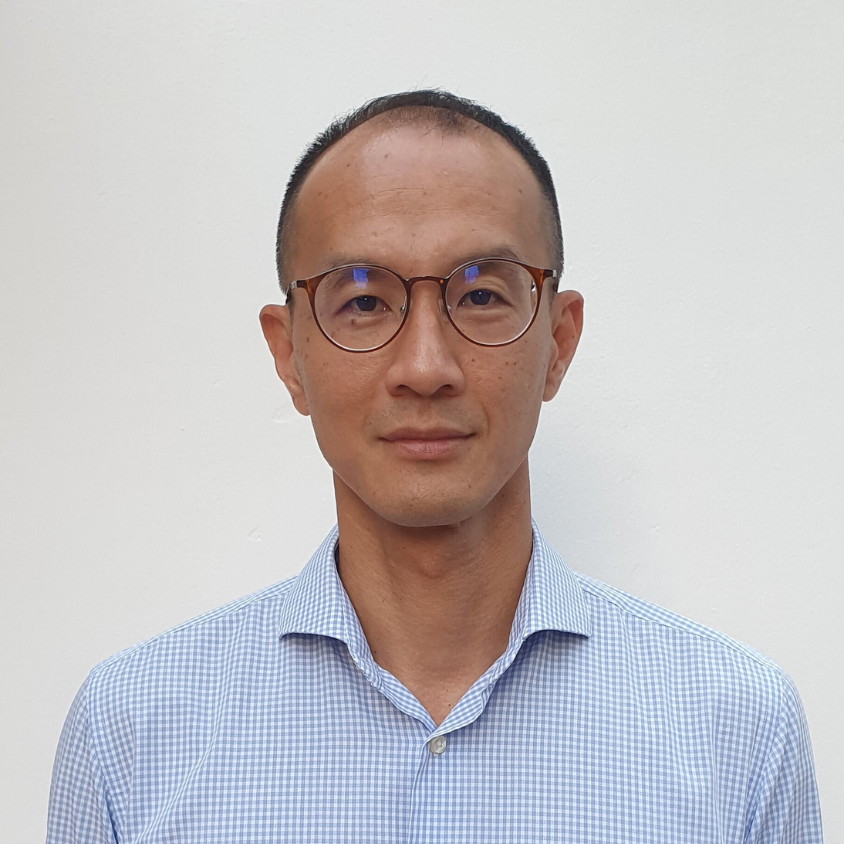
HC

Hor Chee Leng

Head of Business Development, Southeast Asia, Principles for Responsible Investment (PRI)

Chee Leng is the Head of Business Development, Southeast Asia, at the UN-supported Principles for Responsible Investment (PRI). At the PRI, she convenes regional asset owners, venture capital and private equity leaders, including forums on responsible AI investing, addressing algorithmic accountability, data ethics and global AI governance frameworks.

Speaking on

Responsible AI investingAI governance frameworksESG and impact strategy
Full bio

With over two decades of regional leadership across Singapore, Malaysia and Indonesia, her background is anchored in process, technology and strategy consulting at Accenture, a decade as Vice President at OCBC Bank, and driving the NASDAQ listing of a decarbonisation enterprise as its COO.

She has a proven track record designing ESG and impact strategies for family offices in Southeast Asia.

RL

Reuben Lai

CEO and Co-Founder, Arkadiah

Reuben Lai co-founded Arkadiah, a nature tech company that revives degraded lands through AI-enabled nature restoration. He is passionate about leveraging his experience of having run multiple technology businesses to accelerate Southeast Asia's momentum towards a nature-positive future.

Speaking on

AI-enabled nature restorationNature techScaling technology businesses
Full bio

Prior to Arkadiah, he was Senior Managing Director at GXS Bank (GXS), a digital bank whose mission is to make banking better for everyday consumers and small businesses. He oversaw the bank's regional growth strategy and technology development. He served on the Board of GXS and the Digibank in Malaysia.

He also held roles as Senior Managing Director at Grab Financial Group, where he spearheaded all verticals across the region including payments, lending, insurance and wealth management. Under his leadership, Grab Financial Group grew into one of the largest fintech in the region, hitting unicorn status with the closing of its Series A funding. He also led the company in securing Digibank licences in Singapore and Malaysia.

He was formerly at Bain & Company and The Walt Disney Company. He holds a Master of Business Administration (MBA) from INSEAD.

CG

Carla Gomez Briones

Lead for Climate and Sustainability and Officer-in-Charge, Global Centre for Technology, Innovation and Sustainable Development, United Nations Development Programme (UNDP)

Carla Gomez Briones is the Lead for Climate and Sustainability and Officer-in-Charge at the United Nations Development Programme (UNDP) Global Centre for Technology, Innovation and Sustainable Development in Singapore.

Speaking on

Climate policySustainable finance and carbon marketsAI for environmental sustainability
Full bio

With over a decade of experience across Latin America, Africa, and Asia-Pacific, Carla is a senior expert in climate policy, sustainable finance, and digital innovation for sustainable development. She has led strategic climate and economic development initiatives across multiple UNDP country offices, regional programmes, and global partnerships, working with governments to advance climate action and accelerate sustainable development.

At the UNDP Global Centre, Carla leads the Centre's climate and sustainability portfolio, driving initiatives on carbon markets, air quality monitoring, circular economy, and AI-enabled solutions for environmental sustainability. Prior to joining the Global Centre, she worked with the Rockefeller Foundation's Climate and Power team, supporting global investments for just energy transitions. Carla is a Fulbright Scholar and holds a Master's degree in International Development from the University of Pittsburgh, an MBA from the University of La Rioja, and is an alumna of Georgetown University's Global Competitiveness Leadership Program.

SY

Steve Yim

Director, Centre for Climate Change and Environmental Health, Nanyang Technological University

Prof. Steve H. L. Yim is the Director of the Centre for Climate Change and Environmental Health (CCEH) at Nanyang Technological University (NTU), Singapore, and Professor of Environmental Health jointly appointed at the Asian School of the Environment and the Lee Kong Chian School of Medicine.

Speaking on

Air pollution and healthClimate and healthTransboundary air pollution
Full bio

Prof. Yim is an internationally recognised scientist in the fields of air pollution, climate change and human health, with a particular focus on transboundary air pollution. He has published more than 140 papers in high-impact international journals such as Lancet Planetary Health, Environment International and Environmental Science and Technology. He has been listed among the world's top 2% scientists (by single-year impact) by Stanford University for five consecutive years.

He serves as the lead PI of the Wellcome Trust-funded project Pollution and Rising Environmental Drivers of Illness under Climate Threats in Asia (PREDICT-ASIA) and as Co-Lead Principal Investigator of the Climate Transformation Programme (CTP). Serving on the editorial boards of Environment International and GeoHealth, he is devoted to promoting climate and health research. He also serves on the World Health Organization's Global Air Pollution and Health – Technical Advisory Group (GAPH-TAG), supporting WHO's work in reviewing health impact assessments, interventions and policies to mitigate the health burdens of air pollution.

He has worked closely with the governments of Hong Kong and Singapore, offering professional advice on air quality management, and is frequently interviewed by major media outlets on air quality and climate-related events.

YC

Yu Ping Chan

Head, Partnerships and Engagement, and Digital, AI and Innovation Hub Coordinator, UNDP-Singapore Global Center

Yu Ping Chan leads the Positioning, Engagement and Strategic Advocacy team at the Digital, AI and Innovation Hub of UNDP, the United Nations' development agency. There, Yu Ping drives global thought leadership and builds partnerships to support UNDP's digital development and innovation work. She concurrently serves as the interim Coordinator heading the UNDP Global Center on Technology, Innovation and Sustainable Development in Singapore.

Speaking on

Digital developmentMultilateral cooperation on technologyAI partnerships
Full bio

Yu Ping previously headed the Rising Nations Initiative Secretariat at the Global Center for Climate Mobility. She has extensive experience with multilateral diplomacy and the United Nations system, having also previously led the Office of the UN Secretary-General's Envoy on Technology, as well as the Policy and Regional Support teams in the UN Office of Counter-Terrorism. Prior to this, she worked in the UN's Department of Political Affairs, and in the New York Office of the United Nations Office on Drugs and Crime.

Before joining the UN Secretariat, Yu Ping was a diplomat in the Singaporean Foreign Service. She served at the Singapore Mission to the United Nations in New York as well as at the Ministry of Foreign Affairs, overseeing the Association of Southeast Asian Nations (ASEAN).

Yu Ping has a Bachelor of Arts (magna cum laude) from Harvard University, and a Masters of Public Administration from Columbia University's School of International and Public Affairs.

At the summit: The Oxford Debate
HS

Hwee Ping Sim

Co-Head, Project Management Office, Gurīn Energy

At Gurīn Energy, Hwee Ping co-heads the Project Management Office, overseeing project development, project monitoring and reporting. He also leads business origination efforts for the Malaysia market.

Speaking on

Energy transitionInfrastructure developmentProject finance and partnerships
Full bio

Hwee Ping brings more than 22 years of experience in energy transition and core infrastructure, spanning greenfield project development, M&A, capital raising, strategic partnerships, PPP/P3 structures, and EPC delivery across Southeast Asia, China, India, the Middle East, and Africa.

Before joining Gurīn Energy, he held roles in PwC's Capital Projects and Infrastructure (CP&I) practice and Corporate Finance teams.

He holds a bachelor's degree in computer science (Business) from the National University of Singapore and an MBA from Escuela de Organización Industrial (Spain). He is based in Singapore.

KL

Dr Khee Poh Lam

Professor of Architecture and the Built Environment, College of Design and Engineering, National University of Singapore

Professor Lam is an architect, educator and researcher who specialises in computational design support systems for total building performance analysis and building diagnostics. He is a Fellow of the Royal Institute of British Architects and Fellow of the International Building Performance Simulation Association.

Speaking on

Building performance and diagnosticsSustainable built environmentHealthy buildings
Full bio

He is Professor Emeritus at Carnegie Mellon University, former Dean of the School of Design and Environment at NUS, and Advisor to NUS Cities, College of Design and Engineering, NUS.

He has completed many major funded research projects in Singapore and the USA, and findings are widely published. He is an Editorial Board Member of Building Simulation: An International Journal (Springer and Tsinghua University Press), Honorary Editorial Board Member of the Journal of Building Performance Simulation (Taylor and Francis, UK), and of the International Journal on Smart and Sustainable Cities (World Scientific and Centre for Liveable Cities, Singapore).

He serves as an Advisory Board member of Delos, USA, and a member of the International Well Building Institute Global Commission on Healthy Indoor Air. He is a Fellow of the Centre for Liveable Cities, Ministry of National Development, Singapore.

He is a building performance consultant for several major award-winning projects and certified green buildings in Singapore, China and the USA. He was awarded the 2013 Alexander Schwarzkopf Prize from the US National Science Foundation “for exemplary research contribution to technology innovation and positive impact on technology, industry and the society as a whole”. He also received the IBM Faculty Award in 2010, was conferred the inaugural iBuildSG LEAD Distinguished Fellow by the Building and Construction Authority, Singapore in 2020, and is a winner of the International Well Building Institute Global Educator Award 2025.

GK

Gaurav Keerthi

Founder and CEO, StrongKeep Cybersecurity

Brig. General (NS) Gaurav Keerthi is the Chief Executive Officer of StrongKeep Cybersecurity, a Singapore-based start-up providing simple, affordable, and holistic cybersecurity for small-medium businesses.

Speaking on

CybersecurityDigital governance and global normsTech for good
Full bio

He was the former Deputy Commissioner of Cybersecurity & Deputy Chief Executive of the Cyber Security Agency of Singapore, where he shaped national regulations and global norms at the United Nations, secured critical infrastructure, and supported cyber crisis management. He has also held roles such as the CIO of the Republic of Singapore Air Force, and an EVP at Ensign InfoSecurity (Asia's largest cybersecurity services company). He gives talks and advises boards and governments on digital innovation and cybersecurity issues.

He holds degrees from Stanford University and Harvard University (both on full scholarship) and is a Senior Adjunct Fellow at RSIS at the Nanyang Technological University, Singapore. Outside work, he is the co-founder of better.sg, the national tech-for-good charity. He is also a published author of a local bestselling book on debating, and a television personality on an Emmy-nominated show.

At the summit: The Oxford Debate
SJ

Dr Shashi Jayakumar

Founder and Executive Director, SJKGeostrategic Advisory

Dr Shashi Jayakumar is Founder and Executive Director of SJKGeostrategic Advisory, a security and risk consultancy.

Speaking on

Geopolitics and Southeast AsiaHybrid threats and disinformationTechnology and security
Full bio

SJKGeostrategic Advisory provides client services relating to geopolitics (especially Southeast Asia and great power competition), navigating the politics of Southeast Asia, risk, hybrid threats (disinformation, foreign interference), technology (cyber, AI), and issues relating to extremism and polarisation.

Before this, at the S. Rajaratnam School of International Studies (RSIS), he held until July 2023 the appointment of Head of the Centre of Excellence for National Security and Executive Coordinator, Future Issues and Technology.

His earlier career was in the Administrative Service of Singapore's government. During his time in government, he was posted to various Ministries, with most of his experience being in the security sector in the Ministry of Defence.

At the summit: The Oxford Debate
Who's in the room

The right room for the right conversations

A curated group of stakeholders, selected for relevance and seniority, so every conversation is with someone who can act on it.

Big Tech and cloud providers

Showcase AI-for-sustainability solutions, strengthen enterprise relationships, and lead the responsible AI conversation.

Corporates using AI in operations

Demonstrate innovation leadership and connect with solutions that improve efficiency and lower emissions.

Start-ups in climate, energy and sustainability

Gain visibility and credibility, and network with potential investors and customers.

Government and public-sector agencies

Shape policy, identify deployable solutions, and support digital and sustainable development goals.

Investors, funds and family offices

Access curated deal flow, network with founders, and understand emerging market opportunities.

Builders and researchers

Turn ideas into implementation alongside the people who will deploy them.

Who we convene

Organised by Eco-Business

Asia Pacific's leading sustainable development platform since 2009

UAIFS builds on Unlocking capital for sustainability, Eco-Business's flagship summit hosted across six Asian markets since 2018. B Corp certified since 2023.

17M+Annual pageviews
2.9M+Annual sessions
19%Readers who are C-suite, presidents or board members
6Asian markets hosting UCFS

The Next Great Divergence — or the Next Great Convergence?

Artificial intelligence (AI) is emerging as the defining technology of this decade, with consequences reaching far beyond the technology sector. Asia represents a critical test of whether AI can broaden opportunity – or further deepen inequality.

The summit

A business and policy platform for AI, sustainability and development

Eco-Business and UNDP are launching a new platform that puts AI governance at the centre of the conversation on AI and sustainable development.

Organised by Eco-Business in partnership with the United Nations Development Programme (UNDP), the inaugural summit brings together:

  • Government leaders
  • Investors
  • Technology companies
  • Civil society

The future is not predetermined by the technology alone, but by the decisions businesses and governments make today.

  • Infrastructure investment
  • Energy and climate strategy
  • Supply chains
  • Finance
  • Governance
  1. 2018Unlocking capital for sustainability (UCFS) launches
  2. 6 marketsUCFS hosted across six Asian markets
  3. 20 Nov 2026Inaugural UAIFS in Singapore
  4. 2027+Expanding to multiple geographies
Why now

AI's gains are far from guaranteed

Artificial intelligence is the defining technology of this decade. How it is built, powered and governed will decide who benefits.

The prizeUS$15TAI's potential addition to global GDP by 2030, including an estimated US$1 trillion for ASEAN economies.
ASEAN US$1TRest of world US$14T

Source: UNDP estimate

The gap~200xA nearly 200-fold income gap between economies in the region makes Asia a critical test of whether AI broadens opportunity – or deepens inequality.

Three pressures AI is placing on the region

Energy and water

Data centres strain energy grids and water systems, even as AI helps utilities integrate renewables, model climate risk and monitor biodiversity.

Jobs and livelihoods

AI is transforming labour markets at unprecedented speed, from factory floors to the gig economy, often faster than institutions can respond.

Capital flows

Vast flows of capital are shaping where infrastructure is built, which jobs are created and how the benefits of growth are distributed.

If deployed responsibly, AI can…

  • Drive productivity
  • Accelerate climate solutions
  • Create new economic opportunities across Asia

Without safeguards, AI could…

  • Compound the environmental and social costs of growth
  • Entrench existing disparities
  • Widen the divide between those who can deploy it and those left behind
Themes

Five interconnected themes

Every session on the programme draws on one or more of these.

01

Sustainable AI infrastructure

Managing the land, energy, water and infrastructure demands of AI while harnessing its potential for climate action.

02

AI for resilient economies

Using AI to strengthen supply chains and operations.

03

Inclusive AI and human development

Navigating the implications of AI on jobs, skills and economic opportunity.

04

Financing the AI economy

Unlocking investment for responsible and sustainable AI innovation.

05

AI safety and governance

Building frameworks for transparency, accountability, risk management and responsible deployment.

See the themes in action

From the opening plenary on AI infrastructure to the Oxford Debate on who should govern AI.

Explore the agenda
Objectives

What the summit is here to do

Shape the narrative

On how AI can accelerate climate action, the energy transition, resilient supply chains and sustainable growth.

Advance governance frameworks

Data integrity, transparency, accountability and risk management, alongside AI's energy use.

Build consensus

On responsible deployment standards that align AI innovation with sustainability outcomes.

Catalyse partnerships

Spark the dialogue and partnerships that move ideas to impact.

Who's in the room
  • Government officials
  • Diplomatic representatives
  • Business leaders
  • Financial institutions
  • Corporate and technology firms
  • Academia and civil society
The day

One day, eight sessions

  • Date20 November 2026
  • Time9.00am to 3.00pm, GMT+8
  • VenueShangri-La Orchard, Singapore
  1. Welcome and opening keynote
  2. Fireside chat
  3. Opening plenary
  4. Panel: future scenarios
  5. In focus: AI in action
  6. The Oxford Debate
  7. Closing keynote
  8. Networking lunch
Track record

17 years as the region's trusted authority

Trusted news and advisory for a senior audience of multinationals, SMEs, governments, multilateral institutions and civil society. Headquartered in Singapore, with a presence in Beijing, Hong Kong, Manila, Kuala Lumpur, Jakarta and London.

1.8M+Senior-level visitors a year
49%Readers in senior management
115,000+Marketing contacts worldwide
2023B Corp certified

Join us on 20 November 2026

Registration is open for the inaugural edition in Singapore.

Agenda

A half-day, in-person programme built for participation: an opening keynote and a fireside chat to set the context, an opening plenary on AI infrastructure and energy, a look at future scenarios for AI, an in-focus showcase of proven AI use cases and an Oxford-style debate, followed by networking lunch.

The day at a glance

Select a block to jump to its sessions.

Registration

10 min
Welcome

Welcome remarks

Duration10 minFormatListenBest forEveryone

Eco-Business opens the inaugural summit: why AI and sustainability can no longer be planned on separate tracks, and what this room should leave having agreed.

Speakers

JC
Jessica CheamConfirmedCEO and Founder, Eco-Business
20 min
Keynote

Opening keynote address

Duration20 minFormatListenBest forEveryone

UNDP sets out why Asia is a critical test for AI: whether it broadens opportunity across a region with a nearly 200-fold income gap, or deepens the divide between those who build the technology and those left behind.

Speakers

EV
Edward VrkićConfirmedResident Representative, UNDP Malaysia, Singapore and Brunei Darussalam
30 min
Fireside chat

The next great divergence – or the next great convergence?

Duration30 minFormatFireside chatBest forBoards, investors and policymakers

Asia's AI revolution is at a critical inflection point. Though AI is boosting productivity, accelerating the energy transition and bolstering resilience to climate risks, it threatens to widen disparities through uneven technology transfer, entrenched by continued failures in governance.

This one-to-one conversation will weigh AI's potential for good against growing governance risks, including who should set the guardrails, the frameworks needed for inclusive and just AI transitions, and what clarity regulators, industry and investors need to commit for the long term.

Themes include AI governance, the digital divide, innovation, risk, finance and sustainability, the Hamburg Declaration on Responsible AI, and Singapore's role in advancing a global framework on AI governance.

Why it matters: AI governance remains an abstract concept. This conversation will identify a concrete blueprint for an inclusive technological transition.

You will leave with

  • Insights into the governance choices shaping future risks and opportunities
  • Concrete policy options to manage risks and leverage opportunities
  • The incentives needed to secure long-term stakeholder buy-in
45 min
Opening plenary

The infrastructure paradox: can AI power Asia's energy transition without breaking it?

Duration45 minFormatPanel with audience Q&ABest forEnergy, infrastructure, real estate and climate tech

Asia's energy grids are facing acute risks from climate change, trade shocks and surging demand. While AI offers unprecedented capabilities to optimise grid loads, forecast demand and build resilience, the data centres needed to power it are outpacing the region's availability of clean power supply and energy efficiency standards.

This plenary brings together leading energy providers, grid operators and infrastructure investors to confront this central paradox: how to harness AI's critical grid and climate solutions without its underlying infrastructure derailing Asia's net-zero transition.

Why it matters: Without effective alignment, the technologies designed to accelerate the energy transition could hinder Asia's net-zero goals.

You will leave with

  • Insights into balancing data centre energy demands with regional grid constraints
  • Strategic frameworks to deploy AI for grid optimisation while minimising its inherent carbon footprint
  • Actionable pathways to ensure AI serves as an accelerator for the energy transition rather than an obstacle

Speakers

HS
Hwee Ping SimCo-Head, Project Management Office, Gurīn Energy
KL
Dr Khee Poh LamProfessor of Architecture and the Built Environment, College of Design and Engineering, National University of Singapore

Tea break

45 min
Panel

The next frontier – Future scenarios for AI and the world

Duration45 minFormatPanel with audience Q&ABest forStrategy and policy leaders

As global AI adoption accelerates, regional economies face a spectrum of future trajectories. The technology stands to boost GDP growth in advanced and developing Asian markets alike. However, without proper governance standards, rapid deployment risks deepening the digital divide between high-tech hubs and developing economies, concentrating benefits while widening regulatory fragmentation.

This forward-looking session examines how varying speeds of AI integration, governance models and investment pipelines will shape Asia's economic, environmental and social landscape by 2030 and beyond. Speakers will explore best and worst-case scenarios to help decision-makers navigate uncertainty and steer digital transformation toward sustainable and inclusive development.

Why it matters: Building anticipatory governance frameworks is essential to capitalise on AI's opportunities while insulating against long-term risks.

You will leave with

  • Strategic foresight into plausible 2030 and beyond scenarios for AI integration across regional economies
  • An understanding of the key regulatory, geopolitical and technological tipping points that will determine regional outcomes
  • Practical frameworks to future-proof policy, corporate strategy and capital allocation against emerging risks

Speakers

DL
Daniel A. LevineSenior Digital & AI Specialist, World Bank Group
HC
Hor Chee LengHead of Business Development, Southeast Asia, Principles for Responsible Investment (PRI)

Moderator

JN
Jayant NarayanDigital, AI and Innovation Lead, UNDP Global Centre, Singapore
30 min
In focus

AI in action: Proven use cases for sustainable impact

Duration30 minFormatCase study showcaseBest forCorporate, government and start-up leaders

AI is increasingly transitioning from pilot projects into core operational frameworks, helping to address critical environmental and social challenges facing society today. Across public and private sectors, these technologies are driving measurable impact – encompassing everything from precision agriculture to enhancing disaster response and supply chain transparency.

This in-depth showcase convenes leading public and private sector players to present real-world case studies of AI deployed for sustainable impact, examining operational successes alongside the bottlenecks hindering wider adoption, including data fragmentation, implementation costs and regulatory uncertainty.

Why it matters: Demonstrating scalable, real-world applications is essential to prove AI's tangible value for climate action and move the conversation from theory to impact.

You will leave with

  • Insights into AI use cases deployed by governments, corporations and startups
  • Practical strategies to navigate deployment hurdles, including data, costs and governance risks
  • Actionable frameworks to evaluate ROI, scale proven solutions and align AI integration with sustainability goals

Speakers

RL
Reuben LaiCEO and Co-Founder, Arkadiah
CG
Carla Gomez BrionesLead for Climate and Sustainability and Officer-in-Charge, Global Centre for Technology, Innovation and Sustainable Development, United Nations Development Programme (UNDP)
SY
Steve YimDirector, Centre for Climate Change and Environmental Health, Nanyang Technological University
45 min
The Oxford Debate

The Oxford Debate: This House believes today's AI leaders cannot be trusted to govern AI responsibly

Duration45 minFormatLive vote before and afterBest forEveryone; bring your view

The deployment of frontier artificial intelligence is often dominated by a concentrated group of global tech players and hubs. While private-sector innovation is essential to lower costs, scale solutions and democratise access to these technologies, critics caution that relying on commercial interests alone creates an inherent conflict between profit and public good.

This plenary debate pits these two opposing views against each other, exploring the tension between market-driven approaches and public oversight. Can today's market leaders establish trustworthy governance frameworks, or will this concentration of data, resources and capital in the hands of a few disenfranchise developing economies and vulnerable groups?

The motion: This House believes today's AI leaders cannot be trusted to govern AI responsibly.

Why it matters: As AI adoption becomes widespread, who controls the technology often determines who sets the rules – shaping digital sovereignty, market equity and environmental accountability for decades to come.

You will leave with

  • An understanding of the arguments on corporate self-regulation versus mandatory global governance
  • Insights into the risks of market concentration and digital dependency for Asia and the world
  • Perspectives on balancing private sector-led innovation with public good

Speakers

YC
Yu Ping ChanHead, Partnerships and Engagement, and Digital, AI and Innovation Hub Coordinator, UNDP-Singapore Global Center
EN
Elina NoorNonresident Scholar, Asia Program, Carnegie
GK
Gaurav KeerthiFounder and CEO, StrongKeep Cybersecurity
SJ
Dr Shashi JayakumarFounder and Executive Director, SJKGeostrategic Advisory
10 min
Keynote

Closing keynote address

Duration10 minFormatListenBest forEveryone

Networking lunch

End of summit

Secure your seat for 20 November

Seats are limited and confirmed individually for relevance and seniority.

Speakers

Featuring distinguished speakers across government, policy, multilateral organisations, FIs, corporate, technology and industry.

Singapore 2026

Featured speakers

JC

Jessica Cheam

CEO and Founder, Eco-Business

Jessica founded Eco-Business and has spent two decades at the intersection of media, sustainable development and ESG. She advises boards of governments and multinationals on ESG strategy and governance, with a particular interest in where sustainability meets technology.

Speaking on

AI governance and board oversightSustainability and technologyJust transition
Full bio

She is an independent non-executive director of Wilmar International and ComfortDelGro, where she chairs the Board Sustainability Committee and sits on the Digitalisation Committee. A former political correspondent at The Straits Times, she manages The Liveability Challenge, is the author of Forging a Greener Tomorrow, holds INSEAD's Certificate in Corporate Governance, and regularly speaks at forums including the World Economic Forum's Annual Meeting in Davos.

At the summit: Welcome remarks
EV

Edward Vrkić

Resident Representative, UNDP Malaysia, Singapore and Brunei Darussalam

Mr. Vrkić is currently serving as UNDP's Resident Representative to Malaysia, Singapore and Brunei Darussalam. Prior to this, he was the Strategic Adviser to UNDP's Bureau for Asia and the Pacific and before this, UNDP's Deputy Resident Representative to Papua New Guinea.

Speaking on

Inclusive developmentDigital inclusionClimate resilience
Full bio

He has served in various senior diplomatic, advisory, civil service and private sector positions over the last 25 years across the Asia-Pacific, Middle East and Africa. These include for the Australian Department of Foreign Affairs and Trade, Australia's Agency for International Development, as Senior Foreign Policy Adviser to the Australian Foreign Minister, Chief of Staff to Pacific Island Forum Leaders, and Australia's Head of Aid Operations and Humanitarian Coordinator to Papua New Guinea.

Mr. Vrkić has a master's degree in international relations (with distinction) from the Australian National University and a Bachelor of Arts with honours (first class) from the University of Wollongong. He has extensive experience delivering development cooperation, public policy, communications, humanitarian response, leading negotiations, implementing reform programs, and driving innovation across a wide range of countries and socio-economic contexts.

EN

Elina Noor

Nonresident Scholar, Asia Program, Carnegie

Elina Noor is a nonresident scholar in the Asia Program at Carnegie where she focuses on developments in Southeast Asia, particularly the impact and implications of technology in reshaping power dynamics, governance, and nation-building in the region.

Speaking on

Technology and governance in Southeast AsiaAI and geopoliticsCyber and digital security
Full bio

Previously, Elina was director of political-security affairs and deputy director of the Washington, D.C. office at the Asia Society Policy Institute. Prior to that, Elina was an associate professor at the Daniel K. Inouye Asia-Pacific Center for Security Studies in Honolulu. She spent most of her career at the Institute of Strategic and International Studies Malaysia, where she last held the position of director, foreign policy and security studies. Elina was also formerly with the Brookings Institution's Project on U.S. Relations with the Islamic World.

Between 2017 and 2019, Elina was part of the Global Commission on the Stability of Cyberspace. From 2021 to 2023, she served on the International Committee of the Red Cross Global Advisory Board on digital threats during conflict. She currently serves on the United Nations Secretary-General's Advisory Board on Disarmament Matters.

Elina read law at Oxford University. She obtained an LL.M (Public International Law) from the London School of Economics and Political Science, University of London, graduating with distinction at the top of her class. A recipient of the Perdana (Malaysian Prime Minister's) Fellowship, she also holds an MA in security studies from Georgetown University, where she was a Women in International Security Scholar.

At the summit: The Oxford Debate
JN

Jayant Narayan

Digital, AI and Innovation Lead, UNDP Global Centre, Singapore

Jayant Narayan leads Digital, AI and Innovation at the UNDP Global Centre in Singapore, where he conducts policy research and implements capacity building programmes for governments, parliaments and regulators on AI and digital strategy, governance and oversight. An engineer by training, he brings over 16 years of experience across technology, public policy and international development.

Speaking on

AI governance and oversightAI and digital strategyResponsible AI adoption
Full bio

He was the lead author of the UN System's White Paper on AI Governance, and has served on the EU General-Purpose AI Code of Practice working group on systemic risk as well as UNESCO's expert group on the ethics of AI. He has trained more than 150 senior officials and parliamentarians from over 30 countries.

At the World Economic Forum, he led responsible AI adoption work and co-founded the Global Lighthouse Network in manufacturing. Jayant started his career as a software engineer, building and testing data modules for Fortune 100 and Fortune 500 companies. He holds an MPA from Columbia University and a B.Tech in Electrical and Electronics Engineering from VIT.

DL

Daniel A. Levine

Senior Digital & AI Specialist, World Bank Group

Daniel A. Levine is a Senior Digital & AI Specialist with the World Bank Group's Digital and Artificial Intelligence team, based in Singapore. He brings more than 20 years of experience across the World Bank Group and private sector, working at the intersection of technology, economic development, institutional transformation, and international partnerships.

Speaking on

Digital public infrastructureAI for developmentDigital trust and resilience
Full bio

His current work focuses on helping governments across East Asia and the Pacific harness digital technologies and artificial intelligence to strengthen economic competitiveness, increase productivity, improve public services, and create new opportunities for investment and employment. His areas of expertise include AI adaptation, digital public infrastructure, cybersecurity, digital trust and resilience, and innovation. He works with governments and development partners to translate national priorities into practical strategies, policy reforms, investment programs, and measurable development outcomes. His recent work includes supporting the development of the Thailand Digital and AI Compact, delivered to the Royal Thai Government in October 2026.

Previously, Daniel served as Senior Country Officer in the World Bank Group's Singapore Office, where he helped develop strategic partnerships and innovative financing arrangements with government, industry, academia, and international development institutions. He also worked across the World Bank, IFC, and MIGA to connect regional development priorities with Singapore's expertise, institutions, and private sector.

Earlier, he managed the Tokyo Development Learning Center, a US$25 million partnership with the Government of Japan. The Technical Deep Dive model he introduced helped inform more than US$75 billion in World Bank financing across 300 projects in over 80 countries. During his tenure in Japan, he also led the World Bank Group's engagement on Smart Cities and Digital Transformation during the 2019 G20 Summit and served as a founding advisor to the Smart City Institute Japan.

Daniel holds an MBA in International Finance from George Washington University, where he was a Wolcott Fellow, and a Bachelor of Science in Political Science from Arizona State University.

HC

Hor Chee Leng

Head of Business Development, Southeast Asia, Principles for Responsible Investment (PRI)

Chee Leng is the Head of Business Development, Southeast Asia, at the UN-supported Principles for Responsible Investment (PRI). At the PRI, she convenes regional asset owners, venture capital and private equity leaders, including forums on responsible AI investing, addressing algorithmic accountability, data ethics and global AI governance frameworks.

Speaking on

Responsible AI investingAI governance frameworksESG and impact strategy
Full bio

With over two decades of regional leadership across Singapore, Malaysia and Indonesia, her background is anchored in process, technology and strategy consulting at Accenture, a decade as Vice President at OCBC Bank, and driving the NASDAQ listing of a decarbonisation enterprise as its COO.

She has a proven track record designing ESG and impact strategies for family offices in Southeast Asia.

RL

Reuben Lai

CEO and Co-Founder, Arkadiah

Reuben Lai co-founded Arkadiah, a nature tech company that revives degraded lands through AI-enabled nature restoration. He is passionate about leveraging his experience of having run multiple technology businesses to accelerate Southeast Asia's momentum towards a nature-positive future.

Speaking on

AI-enabled nature restorationNature techScaling technology businesses
Full bio

Prior to Arkadiah, he was Senior Managing Director at GXS Bank (GXS), a digital bank whose mission is to make banking better for everyday consumers and small businesses. He oversaw the bank's regional growth strategy and technology development. He served on the Board of GXS and the Digibank in Malaysia.

He also held roles as Senior Managing Director at Grab Financial Group, where he spearheaded all verticals across the region including payments, lending, insurance and wealth management. Under his leadership, Grab Financial Group grew into one of the largest fintech in the region, hitting unicorn status with the closing of its Series A funding. He also led the company in securing Digibank licences in Singapore and Malaysia.

He was formerly at Bain & Company and The Walt Disney Company. He holds a Master of Business Administration (MBA) from INSEAD.

CG

Carla Gomez Briones

Lead for Climate and Sustainability and Officer-in-Charge, Global Centre for Technology, Innovation and Sustainable Development, United Nations Development Programme (UNDP)

Carla Gomez Briones is the Lead for Climate and Sustainability and Officer-in-Charge at the United Nations Development Programme (UNDP) Global Centre for Technology, Innovation and Sustainable Development in Singapore.

Speaking on

Climate policySustainable finance and carbon marketsAI for environmental sustainability
Full bio

With over a decade of experience across Latin America, Africa, and Asia-Pacific, Carla is a senior expert in climate policy, sustainable finance, and digital innovation for sustainable development. She has led strategic climate and economic development initiatives across multiple UNDP country offices, regional programmes, and global partnerships, working with governments to advance climate action and accelerate sustainable development.

At the UNDP Global Centre, Carla leads the Centre's climate and sustainability portfolio, driving initiatives on carbon markets, air quality monitoring, circular economy, and AI-enabled solutions for environmental sustainability. Prior to joining the Global Centre, she worked with the Rockefeller Foundation's Climate and Power team, supporting global investments for just energy transitions. Carla is a Fulbright Scholar and holds a Master's degree in International Development from the University of Pittsburgh, an MBA from the University of La Rioja, and is an alumna of Georgetown University's Global Competitiveness Leadership Program.

SY

Steve Yim

Director, Centre for Climate Change and Environmental Health, Nanyang Technological University

Prof. Steve H. L. Yim is the Director of the Centre for Climate Change and Environmental Health (CCEH) at Nanyang Technological University (NTU), Singapore, and Professor of Environmental Health jointly appointed at the Asian School of the Environment and the Lee Kong Chian School of Medicine.

Speaking on

Air pollution and healthClimate and healthTransboundary air pollution
Full bio

Prof. Yim is an internationally recognised scientist in the fields of air pollution, climate change and human health, with a particular focus on transboundary air pollution. He has published more than 140 papers in high-impact international journals such as Lancet Planetary Health, Environment International and Environmental Science and Technology. He has been listed among the world's top 2% scientists (by single-year impact) by Stanford University for five consecutive years.

He serves as the lead PI of the Wellcome Trust-funded project Pollution and Rising Environmental Drivers of Illness under Climate Threats in Asia (PREDICT-ASIA) and as Co-Lead Principal Investigator of the Climate Transformation Programme (CTP). Serving on the editorial boards of Environment International and GeoHealth, he is devoted to promoting climate and health research. He also serves on the World Health Organization's Global Air Pollution and Health – Technical Advisory Group (GAPH-TAG), supporting WHO's work in reviewing health impact assessments, interventions and policies to mitigate the health burdens of air pollution.

He has worked closely with the governments of Hong Kong and Singapore, offering professional advice on air quality management, and is frequently interviewed by major media outlets on air quality and climate-related events.

YC

Yu Ping Chan

Head, Partnerships and Engagement, and Digital, AI and Innovation Hub Coordinator, UNDP-Singapore Global Center

Yu Ping Chan leads the Positioning, Engagement and Strategic Advocacy team at the Digital, AI and Innovation Hub of UNDP, the United Nations' development agency. There, Yu Ping drives global thought leadership and builds partnerships to support UNDP's digital development and innovation work. She concurrently serves as the interim Coordinator heading the UNDP Global Center on Technology, Innovation and Sustainable Development in Singapore.

Speaking on

Digital developmentMultilateral cooperation on technologyAI partnerships
Full bio

Yu Ping previously headed the Rising Nations Initiative Secretariat at the Global Center for Climate Mobility. She has extensive experience with multilateral diplomacy and the United Nations system, having also previously led the Office of the UN Secretary-General's Envoy on Technology, as well as the Policy and Regional Support teams in the UN Office of Counter-Terrorism. Prior to this, she worked in the UN's Department of Political Affairs, and in the New York Office of the United Nations Office on Drugs and Crime.

Before joining the UN Secretariat, Yu Ping was a diplomat in the Singaporean Foreign Service. She served at the Singapore Mission to the United Nations in New York as well as at the Ministry of Foreign Affairs, overseeing the Association of Southeast Asian Nations (ASEAN).

Yu Ping has a Bachelor of Arts (magna cum laude) from Harvard University, and a Masters of Public Administration from Columbia University's School of International and Public Affairs.

At the summit: The Oxford Debate
HS

Hwee Ping Sim

Co-Head, Project Management Office, Gurīn Energy

At Gurīn Energy, Hwee Ping co-heads the Project Management Office, overseeing project development, project monitoring and reporting. He also leads business origination efforts for the Malaysia market.

Speaking on

Energy transitionInfrastructure developmentProject finance and partnerships
Full bio

Hwee Ping brings more than 22 years of experience in energy transition and core infrastructure, spanning greenfield project development, M&A, capital raising, strategic partnerships, PPP/P3 structures, and EPC delivery across Southeast Asia, China, India, the Middle East, and Africa.

Before joining Gurīn Energy, he held roles in PwC's Capital Projects and Infrastructure (CP&I) practice and Corporate Finance teams.

He holds a bachelor's degree in computer science (Business) from the National University of Singapore and an MBA from Escuela de Organización Industrial (Spain). He is based in Singapore.

KL

Dr Khee Poh Lam

Professor of Architecture and the Built Environment, College of Design and Engineering, National University of Singapore

Professor Lam is an architect, educator and researcher who specialises in computational design support systems for total building performance analysis and building diagnostics. He is a Fellow of the Royal Institute of British Architects and Fellow of the International Building Performance Simulation Association.

Speaking on

Building performance and diagnosticsSustainable built environmentHealthy buildings
Full bio

He is Professor Emeritus at Carnegie Mellon University, former Dean of the School of Design and Environment at NUS, and Advisor to NUS Cities, College of Design and Engineering, NUS.

He has completed many major funded research projects in Singapore and the USA, and findings are widely published. He is an Editorial Board Member of Building Simulation: An International Journal (Springer and Tsinghua University Press), Honorary Editorial Board Member of the Journal of Building Performance Simulation (Taylor and Francis, UK), and of the International Journal on Smart and Sustainable Cities (World Scientific and Centre for Liveable Cities, Singapore).

He serves as an Advisory Board member of Delos, USA, and a member of the International Well Building Institute Global Commission on Healthy Indoor Air. He is a Fellow of the Centre for Liveable Cities, Ministry of National Development, Singapore.

He is a building performance consultant for several major award-winning projects and certified green buildings in Singapore, China and the USA. He was awarded the 2013 Alexander Schwarzkopf Prize from the US National Science Foundation “for exemplary research contribution to technology innovation and positive impact on technology, industry and the society as a whole”. He also received the IBM Faculty Award in 2010, was conferred the inaugural iBuildSG LEAD Distinguished Fellow by the Building and Construction Authority, Singapore in 2020, and is a winner of the International Well Building Institute Global Educator Award 2025.

GK

Gaurav Keerthi

Founder and CEO, StrongKeep Cybersecurity

Brig. General (NS) Gaurav Keerthi is the Chief Executive Officer of StrongKeep Cybersecurity, a Singapore-based start-up providing simple, affordable, and holistic cybersecurity for small-medium businesses.

Speaking on

CybersecurityDigital governance and global normsTech for good
Full bio

He was the former Deputy Commissioner of Cybersecurity & Deputy Chief Executive of the Cyber Security Agency of Singapore, where he shaped national regulations and global norms at the United Nations, secured critical infrastructure, and supported cyber crisis management. He has also held roles such as the CIO of the Republic of Singapore Air Force, and an EVP at Ensign InfoSecurity (Asia's largest cybersecurity services company). He gives talks and advises boards and governments on digital innovation and cybersecurity issues.

He holds degrees from Stanford University and Harvard University (both on full scholarship) and is a Senior Adjunct Fellow at RSIS at the Nanyang Technological University, Singapore. Outside work, he is the co-founder of better.sg, the national tech-for-good charity. He is also a published author of a local bestselling book on debating, and a television personality on an Emmy-nominated show.

At the summit: The Oxford Debate
SJ

Dr Shashi Jayakumar

Founder and Executive Director, SJKGeostrategic Advisory

Dr Shashi Jayakumar is Founder and Executive Director of SJKGeostrategic Advisory, a security and risk consultancy.

Speaking on

Geopolitics and Southeast AsiaHybrid threats and disinformationTechnology and security
Full bio

SJKGeostrategic Advisory provides client services relating to geopolitics (especially Southeast Asia and great power competition), navigating the politics of Southeast Asia, risk, hybrid threats (disinformation, foreign interference), technology (cyber, AI), and issues relating to extremism and polarisation.

Before this, at the S. Rajaratnam School of International Studies (RSIS), he held until July 2023 the appointment of Head of the Centre of Excellence for National Security and Executive Coordinator, Future Issues and Technology.

His earlier career was in the Administrative Service of Singapore's government. During his time in government, he was posted to various Ministries, with most of his experience being in the security sector in the Ministry of Defence.

At the summit: The Oxford Debate
Call for speakers

Know someone who should be on this stage?

Nominate a speaker for our consideration.

Hear them in person

Join the inaugural summit in Singapore on 20 November 2026.

Put your organisation at the centre of Asia's AI and sustainability agenda

UAIFS is organised by Eco-Business in partnership with UNDP. Partners lead the conversation on stage and all year round, in front of the senior leaders who will decide how AI is built, financed and governed across the region.

Why partner

More than a logo on a backdrop

The summit is small and senior by design. Partners get visibility where it counts and a voice in the programme.

Shape the narrative

Co-curate sessions with the Eco-Business team.

Reach senior decision-makers

1.8 million senior-level visitors a year and 115,000+ contacts across Eco-Business channels.

Showcase your brand

Logo visibility throughout the event.

1.8M+senior-level visitors to Eco-Business a year
68%of the audience is senior management and above
115,000+decision-maker contacts in the marketing network
6Asian markets where Eco-Business has run UCFS since 2018
Current partners

Singapore 2026 partners

More partnership opportunities are open for the inaugural edition. Enquire about partnering

Enquire

Let's co-develop a format around your objectives

Tell us what you want to achieve. Our partnerships team will reply with the prospectus, rate card and ideas tailored to your goals.

  • Reply within two working days
  • Customised to meet your needs
  • Learn more about our EB Enterprise membership

Loading the enquiry form…

Register for Unlocking AI for sustainability

20 November 2026
9.00am to 3.00pm (GMT+8)
Shangri-La Orchard, Singapore

Summit starts in
Registration

Tell us about you

Our team reviews each request and confirms your place by email.

  • Leave with practical answers Real deployments and clear next steps from people doing the work, not generic AI talk.
  • Meet the people who decide A curated, senior room of tech providers, investors, regulators and sustainability leads.
  • Shape the rules, not just follow them Contribute to the governance conversation UNDP and Eco-Business will carry forward.

Loading the registration form…

FAQs

Good to know

Can I attend virtually?

No. The 2026 summit is in person only.

Where is the venue?

The summit takes place at Shangri-La Orchard, Singapore. Joining details are sent to all registered delegates.

I'm interested in partnering. Where do I start?

See Partner with us to see current partners, or send an enquiry directly.

Newsletter

Stay in the loop

Not ready to register? Get updates as speakers and new editions are announced.

Singapore 2026, the inaugural edition

Government leaders, investors, technology companies and civil society come together to confront whether AI broadens opportunity across Asia – or further deepens inequality.

20 November 20269.00am to 3.00pm, GMT+8Shangri-La Orchard, Singapore
Synopsis

The Next Great Divergence — or the Next Great Convergence?

Date
20 November 2026
Time
9.00am to 3.00pm, GMT+8
Venue
Shangri-La Orchard, Singapore
Format
Half-day, in person, with networking lunch
Audience
About 150 senior delegates
Organisers
Eco-Business in partnership with UNDP

Artificial intelligence (AI) is emerging as the defining technology of this decade, with consequences reaching far beyond the technology sector. If deployed responsibly, AI can drive productivity, accelerate climate solutions and create new economic opportunities across Asia. By improving trade, energy systems and business efficiency, UNDP estimates that AI could add up to US$15 trillion to global GDP by 2030, including an estimated US$1 trillion for ASEAN economies.

But these gains are far from guaranteed. Without safeguards, AI could compound the environmental and social costs of growth, entrench existing disparities and widen the divide between those able to develop and deploy the technology and those left behind. With a nearly 200-fold income gap between economies in the region, Asia represents a critical test of whether AI can broaden opportunity – or further deepen inequality.

This makes international cooperation on AI governance increasingly urgent. Singapore's recent call at the United Nations for a global body to govern AI underscores the need for credible, inclusive and interoperable frameworks capable of keeping pace with a technology whose impacts extend across borders. It also reflects Singapore's leadership in advancing a pragmatic, forward-looking approach to ensuring that AI innovation is safe, accountable and aligned with the public interest.

Organised by Eco-Business in partnership with the United Nations Development Programme (UNDP), the inaugural Unlocking AI for sustainability summit brings together government leaders, investors, technology companies and civil society to confront these choices directly. It will explore five interconnected themes: sustainable AI infrastructure, AI for resilient economies, inclusive AI and human development, financing the AI economy, and AI safety and governance.

One day. The people who decide.Singapore, 20 November 2026
Agenda

How the day flows

The programme moves from context to action across six blocks, ending with a closing keynote and a networking lunch.

Full session details
9.00am

Set the context

Welcome remarks, an opening keynote from UNDP, and a fireside chat on whether AI widens or closes Asia's divides.

10.00am

Power and planet

Leading energy players on how AI can accelerate, not hinder, Asia's energy transition.

11.00am

Future scenarios

What AI in Asia could look like by 2035, and the choices that decide it.

11.45am

AI in action

Real-world case studies of AI deployed for sustainable impact, and what holds wider adoption back.

12.15pm

Take a position

Two teams argue the motion and the room votes before and after.

Speakers

Key speakers

More names will be announced as they confirm.

All speakers
JC

Jessica Cheam

CEO and Founder, Eco-Business

Jessica founded Eco-Business and has spent two decades at the intersection of media, sustainable development and ESG. She advises boards of governments and multinationals on ESG strategy and governance, with a particular interest in where sustainability meets technology.

Speaking on

AI governance and board oversightSustainability and technologyJust transition
Full bio

She is an independent non-executive director of Wilmar International and ComfortDelGro, where she chairs the Board Sustainability Committee and sits on the Digitalisation Committee. A former political correspondent at The Straits Times, she manages The Liveability Challenge, is the author of Forging a Greener Tomorrow, holds INSEAD's Certificate in Corporate Governance, and regularly speaks at forums including the World Economic Forum's Annual Meeting in Davos.

At the summit: Welcome remarks
EV

Edward Vrkić

Resident Representative, UNDP Malaysia, Singapore and Brunei Darussalam

Mr. Vrkić is currently serving as UNDP's Resident Representative to Malaysia, Singapore and Brunei Darussalam. Prior to this, he was the Strategic Adviser to UNDP's Bureau for Asia and the Pacific and before this, UNDP's Deputy Resident Representative to Papua New Guinea.

Speaking on

Inclusive developmentDigital inclusionClimate resilience
Full bio

He has served in various senior diplomatic, advisory, civil service and private sector positions over the last 25 years across the Asia-Pacific, Middle East and Africa. These include for the Australian Department of Foreign Affairs and Trade, Australia's Agency for International Development, as Senior Foreign Policy Adviser to the Australian Foreign Minister, Chief of Staff to Pacific Island Forum Leaders, and Australia's Head of Aid Operations and Humanitarian Coordinator to Papua New Guinea.

Mr. Vrkić has a master's degree in international relations (with distinction) from the Australian National University and a Bachelor of Arts with honours (first class) from the University of Wollongong. He has extensive experience delivering development cooperation, public policy, communications, humanitarian response, leading negotiations, implementing reform programs, and driving innovation across a wide range of countries and socio-economic contexts.

EN

Elina Noor

Nonresident Scholar, Asia Program, Carnegie

Elina Noor is a nonresident scholar in the Asia Program at Carnegie where she focuses on developments in Southeast Asia, particularly the impact and implications of technology in reshaping power dynamics, governance, and nation-building in the region.

Speaking on

Technology and governance in Southeast AsiaAI and geopoliticsCyber and digital security
Full bio

Previously, Elina was director of political-security affairs and deputy director of the Washington, D.C. office at the Asia Society Policy Institute. Prior to that, Elina was an associate professor at the Daniel K. Inouye Asia-Pacific Center for Security Studies in Honolulu. She spent most of her career at the Institute of Strategic and International Studies Malaysia, where she last held the position of director, foreign policy and security studies. Elina was also formerly with the Brookings Institution's Project on U.S. Relations with the Islamic World.

Between 2017 and 2019, Elina was part of the Global Commission on the Stability of Cyberspace. From 2021 to 2023, she served on the International Committee of the Red Cross Global Advisory Board on digital threats during conflict. She currently serves on the United Nations Secretary-General's Advisory Board on Disarmament Matters.

Elina read law at Oxford University. She obtained an LL.M (Public International Law) from the London School of Economics and Political Science, University of London, graduating with distinction at the top of her class. A recipient of the Perdana (Malaysian Prime Minister's) Fellowship, she also holds an MA in security studies from Georgetown University, where she was a Women in International Security Scholar.

At the summit: The Oxford Debate
JN

Jayant Narayan

Digital, AI and Innovation Lead, UNDP Global Centre, Singapore

Jayant Narayan leads Digital, AI and Innovation at the UNDP Global Centre in Singapore, where he conducts policy research and implements capacity building programmes for governments, parliaments and regulators on AI and digital strategy, governance and oversight. An engineer by training, he brings over 16 years of experience across technology, public policy and international development.

Speaking on

AI governance and oversightAI and digital strategyResponsible AI adoption
Full bio

He was the lead author of the UN System's White Paper on AI Governance, and has served on the EU General-Purpose AI Code of Practice working group on systemic risk as well as UNESCO's expert group on the ethics of AI. He has trained more than 150 senior officials and parliamentarians from over 30 countries.

At the World Economic Forum, he led responsible AI adoption work and co-founded the Global Lighthouse Network in manufacturing. Jayant started his career as a software engineer, building and testing data modules for Fortune 100 and Fortune 500 companies. He holds an MPA from Columbia University and a B.Tech in Electrical and Electronics Engineering from VIT.

DL

Daniel A. Levine

Senior Digital & AI Specialist, World Bank Group

Daniel A. Levine is a Senior Digital & AI Specialist with the World Bank Group's Digital and Artificial Intelligence team, based in Singapore. He brings more than 20 years of experience across the World Bank Group and private sector, working at the intersection of technology, economic development, institutional transformation, and international partnerships.

Speaking on

Digital public infrastructureAI for developmentDigital trust and resilience
Full bio

His current work focuses on helping governments across East Asia and the Pacific harness digital technologies and artificial intelligence to strengthen economic competitiveness, increase productivity, improve public services, and create new opportunities for investment and employment. His areas of expertise include AI adaptation, digital public infrastructure, cybersecurity, digital trust and resilience, and innovation. He works with governments and development partners to translate national priorities into practical strategies, policy reforms, investment programs, and measurable development outcomes. His recent work includes supporting the development of the Thailand Digital and AI Compact, delivered to the Royal Thai Government in October 2026.

Previously, Daniel served as Senior Country Officer in the World Bank Group's Singapore Office, where he helped develop strategic partnerships and innovative financing arrangements with government, industry, academia, and international development institutions. He also worked across the World Bank, IFC, and MIGA to connect regional development priorities with Singapore's expertise, institutions, and private sector.

Earlier, he managed the Tokyo Development Learning Center, a US$25 million partnership with the Government of Japan. The Technical Deep Dive model he introduced helped inform more than US$75 billion in World Bank financing across 300 projects in over 80 countries. During his tenure in Japan, he also led the World Bank Group's engagement on Smart Cities and Digital Transformation during the 2019 G20 Summit and served as a founding advisor to the Smart City Institute Japan.

Daniel holds an MBA in International Finance from George Washington University, where he was a Wolcott Fellow, and a Bachelor of Science in Political Science from Arizona State University.

HC

Hor Chee Leng

Head of Business Development, Southeast Asia, Principles for Responsible Investment (PRI)

Chee Leng is the Head of Business Development, Southeast Asia, at the UN-supported Principles for Responsible Investment (PRI). At the PRI, she convenes regional asset owners, venture capital and private equity leaders, including forums on responsible AI investing, addressing algorithmic accountability, data ethics and global AI governance frameworks.

Speaking on

Responsible AI investingAI governance frameworksESG and impact strategy
Full bio

With over two decades of regional leadership across Singapore, Malaysia and Indonesia, her background is anchored in process, technology and strategy consulting at Accenture, a decade as Vice President at OCBC Bank, and driving the NASDAQ listing of a decarbonisation enterprise as its COO.

She has a proven track record designing ESG and impact strategies for family offices in Southeast Asia.

RL

Reuben Lai

CEO and Co-Founder, Arkadiah

Reuben Lai co-founded Arkadiah, a nature tech company that revives degraded lands through AI-enabled nature restoration. He is passionate about leveraging his experience of having run multiple technology businesses to accelerate Southeast Asia's momentum towards a nature-positive future.

Speaking on

AI-enabled nature restorationNature techScaling technology businesses
Full bio

Prior to Arkadiah, he was Senior Managing Director at GXS Bank (GXS), a digital bank whose mission is to make banking better for everyday consumers and small businesses. He oversaw the bank's regional growth strategy and technology development. He served on the Board of GXS and the Digibank in Malaysia.

He also held roles as Senior Managing Director at Grab Financial Group, where he spearheaded all verticals across the region including payments, lending, insurance and wealth management. Under his leadership, Grab Financial Group grew into one of the largest fintech in the region, hitting unicorn status with the closing of its Series A funding. He also led the company in securing Digibank licences in Singapore and Malaysia.

He was formerly at Bain & Company and The Walt Disney Company. He holds a Master of Business Administration (MBA) from INSEAD.

CG

Carla Gomez Briones

Lead for Climate and Sustainability and Officer-in-Charge, Global Centre for Technology, Innovation and Sustainable Development, United Nations Development Programme (UNDP)

Carla Gomez Briones is the Lead for Climate and Sustainability and Officer-in-Charge at the United Nations Development Programme (UNDP) Global Centre for Technology, Innovation and Sustainable Development in Singapore.

Speaking on

Climate policySustainable finance and carbon marketsAI for environmental sustainability
Full bio

With over a decade of experience across Latin America, Africa, and Asia-Pacific, Carla is a senior expert in climate policy, sustainable finance, and digital innovation for sustainable development. She has led strategic climate and economic development initiatives across multiple UNDP country offices, regional programmes, and global partnerships, working with governments to advance climate action and accelerate sustainable development.

At the UNDP Global Centre, Carla leads the Centre's climate and sustainability portfolio, driving initiatives on carbon markets, air quality monitoring, circular economy, and AI-enabled solutions for environmental sustainability. Prior to joining the Global Centre, she worked with the Rockefeller Foundation's Climate and Power team, supporting global investments for just energy transitions. Carla is a Fulbright Scholar and holds a Master's degree in International Development from the University of Pittsburgh, an MBA from the University of La Rioja, and is an alumna of Georgetown University's Global Competitiveness Leadership Program.

SY

Steve Yim

Director, Centre for Climate Change and Environmental Health, Nanyang Technological University

Prof. Steve H. L. Yim is the Director of the Centre for Climate Change and Environmental Health (CCEH) at Nanyang Technological University (NTU), Singapore, and Professor of Environmental Health jointly appointed at the Asian School of the Environment and the Lee Kong Chian School of Medicine.

Speaking on

Air pollution and healthClimate and healthTransboundary air pollution
Full bio

Prof. Yim is an internationally recognised scientist in the fields of air pollution, climate change and human health, with a particular focus on transboundary air pollution. He has published more than 140 papers in high-impact international journals such as Lancet Planetary Health, Environment International and Environmental Science and Technology. He has been listed among the world's top 2% scientists (by single-year impact) by Stanford University for five consecutive years.

He serves as the lead PI of the Wellcome Trust-funded project Pollution and Rising Environmental Drivers of Illness under Climate Threats in Asia (PREDICT-ASIA) and as Co-Lead Principal Investigator of the Climate Transformation Programme (CTP). Serving on the editorial boards of Environment International and GeoHealth, he is devoted to promoting climate and health research. He also serves on the World Health Organization's Global Air Pollution and Health – Technical Advisory Group (GAPH-TAG), supporting WHO's work in reviewing health impact assessments, interventions and policies to mitigate the health burdens of air pollution.

He has worked closely with the governments of Hong Kong and Singapore, offering professional advice on air quality management, and is frequently interviewed by major media outlets on air quality and climate-related events.

YC

Yu Ping Chan

Head, Partnerships and Engagement, and Digital, AI and Innovation Hub Coordinator, UNDP-Singapore Global Center

Yu Ping Chan leads the Positioning, Engagement and Strategic Advocacy team at the Digital, AI and Innovation Hub of UNDP, the United Nations' development agency. There, Yu Ping drives global thought leadership and builds partnerships to support UNDP's digital development and innovation work. She concurrently serves as the interim Coordinator heading the UNDP Global Center on Technology, Innovation and Sustainable Development in Singapore.

Speaking on

Digital developmentMultilateral cooperation on technologyAI partnerships
Full bio

Yu Ping previously headed the Rising Nations Initiative Secretariat at the Global Center for Climate Mobility. She has extensive experience with multilateral diplomacy and the United Nations system, having also previously led the Office of the UN Secretary-General's Envoy on Technology, as well as the Policy and Regional Support teams in the UN Office of Counter-Terrorism. Prior to this, she worked in the UN's Department of Political Affairs, and in the New York Office of the United Nations Office on Drugs and Crime.

Before joining the UN Secretariat, Yu Ping was a diplomat in the Singaporean Foreign Service. She served at the Singapore Mission to the United Nations in New York as well as at the Ministry of Foreign Affairs, overseeing the Association of Southeast Asian Nations (ASEAN).

Yu Ping has a Bachelor of Arts (magna cum laude) from Harvard University, and a Masters of Public Administration from Columbia University's School of International and Public Affairs.

At the summit: The Oxford Debate
HS

Hwee Ping Sim

Co-Head, Project Management Office, Gurīn Energy

At Gurīn Energy, Hwee Ping co-heads the Project Management Office, overseeing project development, project monitoring and reporting. He also leads business origination efforts for the Malaysia market.

Speaking on

Energy transitionInfrastructure developmentProject finance and partnerships
Full bio

Hwee Ping brings more than 22 years of experience in energy transition and core infrastructure, spanning greenfield project development, M&A, capital raising, strategic partnerships, PPP/P3 structures, and EPC delivery across Southeast Asia, China, India, the Middle East, and Africa.

Before joining Gurīn Energy, he held roles in PwC's Capital Projects and Infrastructure (CP&I) practice and Corporate Finance teams.

He holds a bachelor's degree in computer science (Business) from the National University of Singapore and an MBA from Escuela de Organización Industrial (Spain). He is based in Singapore.

KL

Dr Khee Poh Lam

Professor of Architecture and the Built Environment, College of Design and Engineering, National University of Singapore

Professor Lam is an architect, educator and researcher who specialises in computational design support systems for total building performance analysis and building diagnostics. He is a Fellow of the Royal Institute of British Architects and Fellow of the International Building Performance Simulation Association.

Speaking on

Building performance and diagnosticsSustainable built environmentHealthy buildings
Full bio

He is Professor Emeritus at Carnegie Mellon University, former Dean of the School of Design and Environment at NUS, and Advisor to NUS Cities, College of Design and Engineering, NUS.

He has completed many major funded research projects in Singapore and the USA, and findings are widely published. He is an Editorial Board Member of Building Simulation: An International Journal (Springer and Tsinghua University Press), Honorary Editorial Board Member of the Journal of Building Performance Simulation (Taylor and Francis, UK), and of the International Journal on Smart and Sustainable Cities (World Scientific and Centre for Liveable Cities, Singapore).

He serves as an Advisory Board member of Delos, USA, and a member of the International Well Building Institute Global Commission on Healthy Indoor Air. He is a Fellow of the Centre for Liveable Cities, Ministry of National Development, Singapore.

He is a building performance consultant for several major award-winning projects and certified green buildings in Singapore, China and the USA. He was awarded the 2013 Alexander Schwarzkopf Prize from the US National Science Foundation “for exemplary research contribution to technology innovation and positive impact on technology, industry and the society as a whole”. He also received the IBM Faculty Award in 2010, was conferred the inaugural iBuildSG LEAD Distinguished Fellow by the Building and Construction Authority, Singapore in 2020, and is a winner of the International Well Building Institute Global Educator Award 2025.

GK

Gaurav Keerthi

Founder and CEO, StrongKeep Cybersecurity

Brig. General (NS) Gaurav Keerthi is the Chief Executive Officer of StrongKeep Cybersecurity, a Singapore-based start-up providing simple, affordable, and holistic cybersecurity for small-medium businesses.

Speaking on

CybersecurityDigital governance and global normsTech for good
Full bio

He was the former Deputy Commissioner of Cybersecurity & Deputy Chief Executive of the Cyber Security Agency of Singapore, where he shaped national regulations and global norms at the United Nations, secured critical infrastructure, and supported cyber crisis management. He has also held roles such as the CIO of the Republic of Singapore Air Force, and an EVP at Ensign InfoSecurity (Asia's largest cybersecurity services company). He gives talks and advises boards and governments on digital innovation and cybersecurity issues.

He holds degrees from Stanford University and Harvard University (both on full scholarship) and is a Senior Adjunct Fellow at RSIS at the Nanyang Technological University, Singapore. Outside work, he is the co-founder of better.sg, the national tech-for-good charity. He is also a published author of a local bestselling book on debating, and a television personality on an Emmy-nominated show.

At the summit: The Oxford Debate
SJ

Dr Shashi Jayakumar

Founder and Executive Director, SJKGeostrategic Advisory

Dr Shashi Jayakumar is Founder and Executive Director of SJKGeostrategic Advisory, a security and risk consultancy.

Speaking on

Geopolitics and Southeast AsiaHybrid threats and disinformationTechnology and security
Full bio

SJKGeostrategic Advisory provides client services relating to geopolitics (especially Southeast Asia and great power competition), navigating the politics of Southeast Asia, risk, hybrid threats (disinformation, foreign interference), technology (cyber, AI), and issues relating to extremism and polarisation.

Before this, at the S. Rajaratnam School of International Studies (RSIS), he held until July 2023 the appointment of Head of the Centre of Excellence for National Security and Executive Coordinator, Future Issues and Technology.

His earlier career was in the Administrative Service of Singapore's government. During his time in government, he was posted to various Ministries, with most of his experience being in the security sector in the Ministry of Defence.

At the summit: The Oxford Debate
Partners

Partners for this edition

Organised by Eco-Business in partnership with UNDP.

Partner with this edition

More partnership opportunities are open for the inaugural edition. Enquire about partnering

Be part of the inaugural edition

Registration is open for 20 November 2026 in Singapore.